Hey there! I’m a supplier of high temperature thermocouples, and today I want to chat about how impurities in the materials of these thermocouples can mess with their performance. High Temperature Thermocouple
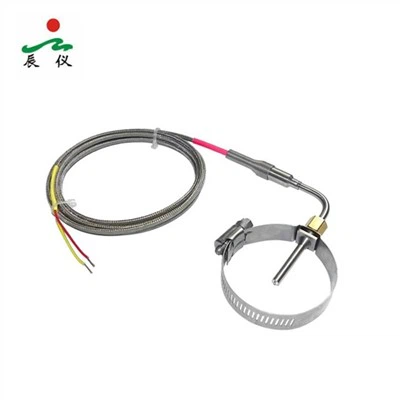
First off, let’s talk about what high temperature thermocouples are. They’re these nifty devices that measure temperature in super – hot environments. They work based on the Seebeck effect, which is all about creating an electric voltage when there’s a temperature difference between two different metals.
Now, impurities in the materials can have a whole bunch of negative impacts. One of the biggies is on the accuracy of the temperature measurement. You see, thermocouples are supposed to give us precise temperature readings. But when there are impurities in the metals that make up the thermocouple, it can throw off the electrical properties of those metals.
For example, let’s say we’ve got a thermocouple made of two different metals, and there’s an impurity in one of them. This impurity can change the way the electrons move through the metal. The Seebeck coefficient, which is a key factor in how the thermocouple generates a voltage based on temperature, can be affected. A change in the Seebeck coefficient means that the relationship between the temperature and the voltage output of the thermocouple is no longer as it should be. So, when we’re trying to measure the temperature, we might get a reading that’s either too high or too low. And that’s a huge problem, especially in industries where accurate temperature control is crucial, like in steelmaking or glass manufacturing.
Another issue is the stability of the thermocouple. Over time, impurities can cause the thermocouple to degrade faster. They can react with the base metals, leading to corrosion or other chemical changes. This can make the thermocouple less reliable. For instance, in a high – temperature furnace, if the thermocouple starts to degrade because of impurities, it might give inconsistent readings. One moment it says the temperature is one thing, and the next it’s something completely different. This kind of instability can lead to production problems, like unevenly heated products or even equipment failures.
The response time of the thermocouple can also be affected by impurities. A thermocouple needs to be able to quickly respond to changes in temperature. But when there are impurities, they can slow down the heat transfer within the thermocouple. This means that it takes longer for the thermocouple to register a change in temperature. In a process where rapid temperature changes are common, like in some chemical reactions, a slow – responding thermocouple can lead to inaccurate control of the reaction, which can have serious consequences for the quality of the final product.
Let’s dig a bit deeper into the types of impurities and how they cause these problems. Some common impurities are things like sulfur, phosphorus, and oxygen. Sulfur, for example, can form sulfides with the metals in the thermocouple. These sulfides can be brittle and can cause cracks in the thermocouple wires. Once there are cracks, the electrical conductivity of the wires is affected, and that messes up the temperature measurement.
Phosphorus can also have a negative impact. It can lower the melting point of the metals in the thermocouple. In a high – temperature environment, this means that the thermocouple might start to melt or deform earlier than it should. And when that happens, it’s no longer able to function properly.
Oxygen is another culprit. It can cause oxidation of the metals in the thermocouple. Oxidation forms a layer on the surface of the metals, which can act as an insulator. This reduces the heat transfer and the electrical conductivity of the thermocouple, leading to inaccurate temperature readings.
As a high temperature thermocouple supplier, we take these issues very seriously. We go to great lengths to ensure that the materials we use are as pure as possible. We source our metals from high – quality suppliers and perform strict quality control checks. We use advanced purification techniques to remove any impurities that might be present in the raw materials.
We also have a team of experts who are constantly researching and developing new ways to improve the performance of our thermocouples. We’re always looking for ways to make our products more accurate, stable, and responsive.
If you’re in an industry that requires high – temperature measurement, you know how important it is to have reliable thermocouples. And that’s where we come in. Our high – quality thermocouples are designed to withstand the toughest conditions and provide accurate temperature readings.
Whether you’re in the power generation industry, the chemical industry, or any other field that needs precise temperature control, we’ve got the right thermocouple for you. Our products are tested and proven to perform well in high – temperature environments.

So, if you’re looking for a reliable supplier of high temperature thermocouples, don’t hesitate to get in touch. We’re here to help you find the perfect thermocouple for your needs. Let’s have a chat about your requirements and see how we can work together to ensure your processes run smoothly.
Protection Tube References:
- "Thermocouple Technology Handbook"
- "High – Temperature Materials and Their Applications"
Chongqing Haichen Instrument Co., Ltd.
As one of the most professional high temperature thermocouple suppliers in China for over 20 years, we’re featured by good service and competitive price. Please rest assured to buy high quality high temperature thermocouple for sale here from our factory. For customized service, contact us now.
Address: No.11 Gusheng Road, Caojie Street, Hechuan District, Chongqing City, P.R. China
E-mail: sales@hcsensor.com
WebSite: https://www.hcsensor.com/
